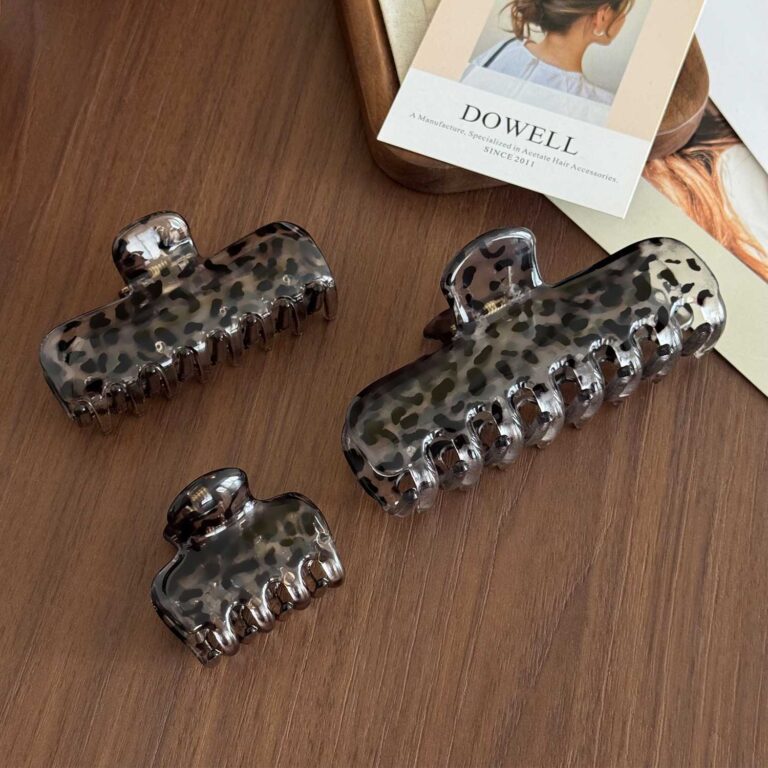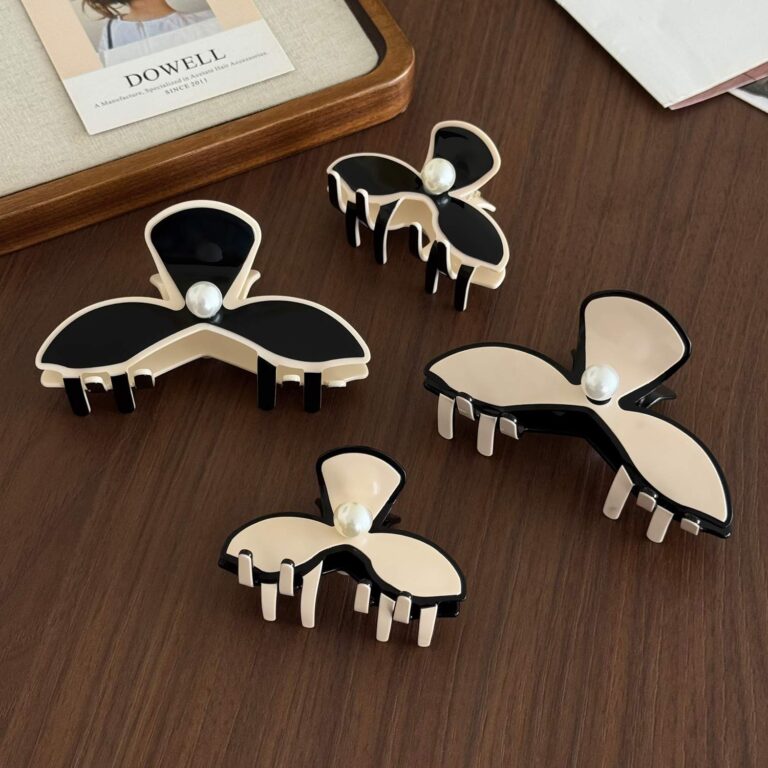

An acetate claw clip manufacturer turns sheet material into a retail-ready accessory through a linked sequence of preparation, cutting, shaping, polishing, assembly and inspection. The quality of the finished clip depends on how well those stages stay connected: the sheet must suit the design, the body must be shaped consistently, and the final hardware and surface must look ready for repeated customer handling.
For brands developing a new range, Dowell‘s OEM and ODM process provides a useful reference for how material preparation, precision carving, shaping, polishing, assembly, packaging and quality inspection fit into one product workflow.
Start with the Right Acetate Sheet
Material Appearance and Pattern Direction
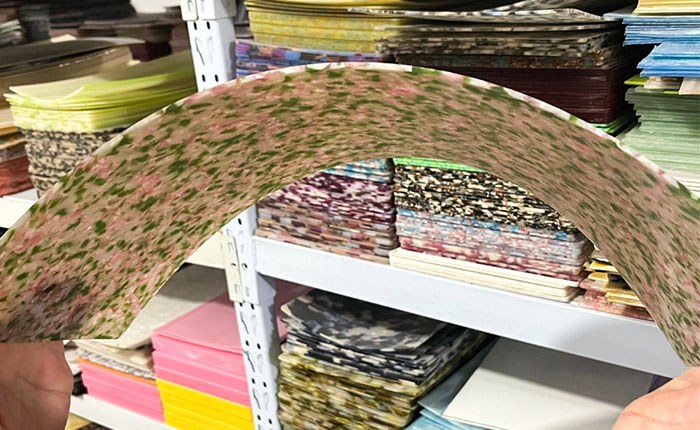
The sheet is the visual starting point for a cellulose acetate hair clip. Colour depth, transparency, pattern movement and surface clarity influence how a finished claw clip reads under retail lighting and in close-up photography.
Pattern direction also matters when a design has a broad curved body or a decorative top. A thoughtful layout can make the material look intentional across a group of clips, while careless placement may make similar products appear unrelated even when they share the same colour family.
Thickness, Colour and Surface Expectations
A production brief should define the visual target before cutting begins. It can describe the preferred colour mood, degree of translucency, pattern character, edge appearance and the relationship between the visible acetate body and the functional base.
From Design File to Precision Cutting
Turning Shapes into Production Drawings
A creative sketch becomes useful to production when the outline, openings, attachment points and functional areas are defined clearly. The drawing should show how the decorative body relates to the clip base, the teeth and the spring so the design remains attractive without losing its practical structure.
For a claw clip supplier, this translation stage is where creative ambition meets repeatability. A shape that looks appealing in a flat image still needs a stable outline, a workable opening and enough room for assembly and finishing.
Cutting Small Details with Consistency
Precision carving gives the sheet a defined silhouette and creates the edges that later stages will refine. Curves, narrow points, cut-outs and repeated decorative features need consistent treatment so that products in the same style do not drift visually.
Shape the Clip for Real Use
Forming the Body and Functional Profile
Shaping gives the cut material its three-dimensional profile. The body, side walls and teeth must work together so the clip opens in a usable way, follows the intended curve and presents a balanced profile when worn.
This is also where size and styling role become practical decisions. A compact clip for a side section needs a different proportion from a larger style for gathered hair, even when both products share the same colour or decorative language.
Aligning the Body with the Claw Structure
A retail-ready clip should look aligned from the front, side and open position. The acetate body, spring, base and teeth need to meet cleanly, because a small mismatch can affect both the visual impression and the way the accessory sits in the hair.
Sample review should therefore include open and closed views, not only a flat product photograph. The clip should be checked in the hand and on representative hairstyles so the finished proportions support the styling promise.
Why Polishing and Edge Finishing Matter
Smooth Edges and Comfortable Contact Areas
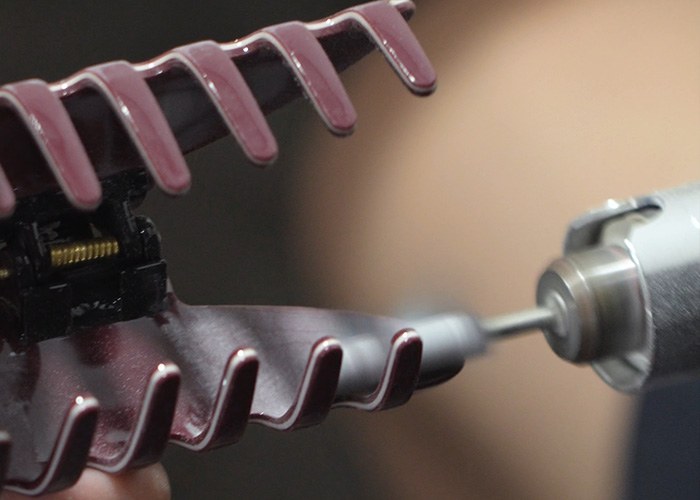
Polishing refines the areas that customers see and touch. Smooth edges make the accessory feel more considered, while careful finishing around the teeth and body helps the product move from a cut component to a wearable hair accessory.
The process is especially important for translucent or high-gloss acetate, because uneven edges can catch light and make the product look unfinished. A consistent finish also helps multiple styles share the same quality impression on a catalogue page.
Surface Gloss and Visual Quality
Surface quality affects how colour and pattern are perceived. A clean, even finish can bring out layered tones and make a simple silhouette look more premium, while inconsistent marks may distract from the design even when the shape itself is correct.
Complete the Product Through Assembly and Decoration
Springs, Bases, Adhesives and Decorative Parts
Assembly brings the material component and the functional clip together. Springs, bases, teeth and decorative parts must be positioned consistently, and adhesive work should remain controlled so the finished accessory looks clean from the front and back.
This stage can change the perceived quality of the product quickly. A well-shaped acetate body loses impact if the hardware sits off-centre, the opening feels uneven or adhesive is visible where the shopper expects a polished finish.
Painting, Logo Placement and Detail Control
Some designs use painted details or additional decorative treatments to create contrast. These elements should support the acetate body rather than compete with it, and any requested brand mark needs a clearly defined position and scale before production begins.
The safest brief separates essential identity from optional decoration. That keeps the design recognisable when viewed at a small online thumbnail while allowing the material, colour and silhouette to remain the main visual message.
Brands can compare finished design directions in the Dowell acetate claw clip range before defining which shapes, colours and decorative details belong in a new retail assortment.
Quality Checks from an Acetate Claw Clip Manufacturer
Appearance and Colour Inspection
Appearance checks should review the outline, colour consistency, pattern placement, surface finish, edge condition and visible assembly points. The goal is to confirm that each piece fits the approved design direction and that a group of products looks coherent when displayed together.
For coloured or patterned acetate, compare samples under consistent light where possible. This makes it easier to distinguish a deliberate material variation from a finish problem that could weaken the collection’s visual consistency.
Opening, Closing, Assembly and Packaging Checks
Functional inspection should include opening and closing action, spring alignment, tooth position and the stability of attached parts. Packaging should also protect the finished surface and keep the product presentable when it reaches a store, warehouse or online fulfilment workflow.
These checks are most useful when they reflect the way the product will actually be handled. A clip that looks correct in a still photograph should also feel consistent in the hand and remain visually clean after normal packing and unpacking.
How Dowell Organizes Production Control
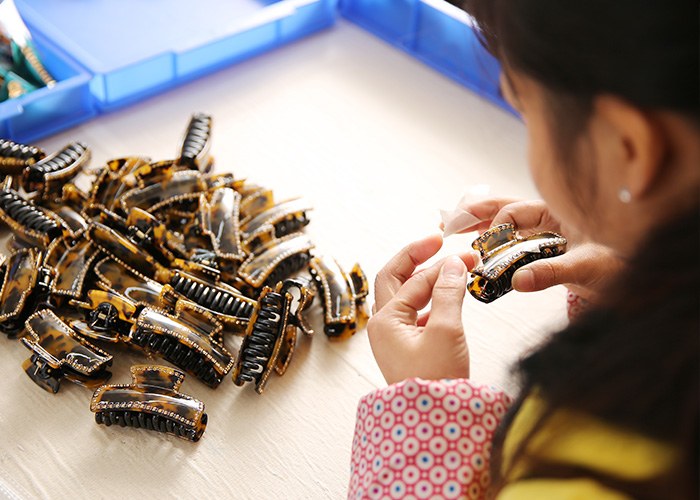
Dowell describes a production flow that includes material preparation, precision carving, material sorting, shaping, gluing, polishing, spray painting, assembly, packaging and quality inspection. Keeping these activities within one connected workflow is an important part of hair accessory quality control.
As an acetate hair accessories manufacturer, Dowell focuses on acetate and acrylic accessories and offers OEM and ODM development with customization for size, colour, pattern and design. For a B2B brand, that combination is useful when a new product needs both a distinctive visual direction and a clear path through production review.
Conclusion
A retail-ready acetate claw clip is the result of many small decisions working together. Sheet selection, precision carving, shaping, polishing, assembly and quality inspection all influence whether the final product looks coherent, feels considered and performs its intended styling role. Choosing an acetate claw clip manufacturer such as Dowell gives brands a practical partner for developing wholesale hair clips that connect material character with repeatable accessory quality.
See Dowell’s hair claw clip product direction when planning a collection that needs clear shapes, polished surfaces and a reliable production story.
FAQ
Q: How are acetate claw clips made?
A: The process generally moves from acetate sheet preparation to precision carving, material sorting, shaping, polishing, assembly, decoration, packaging and quality inspection. Each stage affects the next, so the finished clip depends on both the material choice and the consistency of the production workflow.
Q: What should buyers check on a finished claw clip?
A: Review the silhouette, colour and pattern, edge smoothness, surface finish, spring action, teeth alignment, attachment points and packaging condition. It is useful to inspect both open and closed views and to test the clip on the hairstyles it is intended to serve.
Q: Why is polishing important for acetate hair accessories?
A: Polishing refines cut edges and helps the surface look cleaner and more consistent. It is especially important for glossy or translucent acetate because uneven edges and marks can become more visible in close-up photography and in the customer’s hand.
Q: Can Dowell customize the production process for a brand?
A: Dowell provides OEM and ODM development and supports customization for size, colour, pattern and design. A clear brief can help connect the brand’s visual direction with the practical requirements of shaping, assembly, finishing and quality inspection.